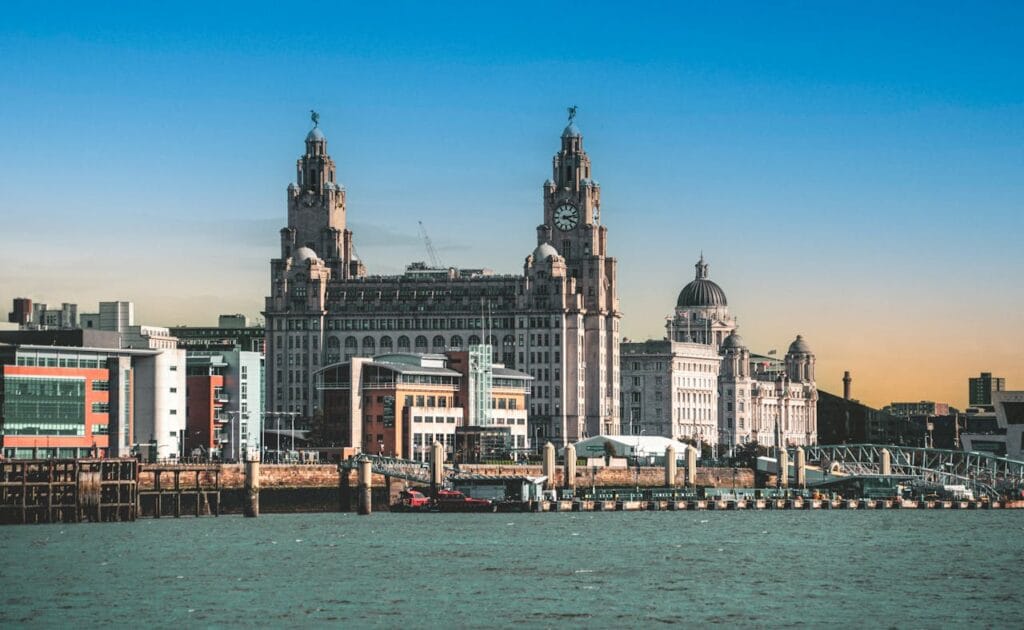

Liverpool’s latest £1bn development plans add to the sense that the city is entering a more ambitious phase of growth. The immediate headline is the approval of the first phase of a major waterfront-led scheme, with planning permission granted for a 28-storey residential tower as part of a wider £1bn project. On its own, that is a significant story. In a broader sense, it also points to something more important: Liverpool is beginning to show the kind of visible, large-scale investment momentum that has helped reshape Manchester over the past decade.
That does not mean Liverpool has suddenly become Manchester, nor should it try to frame itself in those terms. The more useful comparison is that both cities are demonstrating how skyline-changing developments can become part of a wider confidence story. In Manchester, major city-centre growth was not only about tall buildings. It was about what those schemes represented: investor confidence, a stronger urban economy, a growing population and a clearer long-term direction. Liverpool’s current pipeline suggests it is moving further into that kind of conversation.
More than a single tower scheme
The strongest point about Liverpool’s latest development news is that it does not sit in isolation. Alongside the £1bn waterfront plans, Liverpool City Region is actively presenting a far bigger investment case to the market. At MIPIM 2026, the city region said it was taking £11bn of investment opportunities to investors, backed by a decade-long blueprint to grow the economy by £10bn. That is a much bigger signal than one project alone, because it suggests a coordinated effort to position the city region as a serious destination for long-term capital.
The same applies to the emerging North Docks Mayoral Development Corporation. Liverpool City Region has confirmed that a full business case is now in development to transform North Docks into what it describes as one of the UK’s most ambitious regeneration zones. That matters because docklands regeneration can have a city-shaping effect when it is backed by a serious delivery structure, long-term public support and a clear investment narrative.
The Manchester comparison
Manchester’s growth over the past decade has been driven by a combination of regeneration, infrastructure, devolved strategy and sustained inward investment. The point of comparison is not that Liverpool must replicate Manchester district by district. It is that Manchester has shown what can happen when development schemes, public policy and investor confidence start reinforcing one another over a long period. Greater Manchester’s own strategy describes the next decade as another period of growth focused on homes, jobs and innovation, building on momentum already created.
Liverpool now appears to be building a stronger version of that same joined-up story. There is a clearer sense of scale, more visible engagement with global investors and more emphasis on using regeneration to reshape perception as well as place. According to TK Property Group, that is one of the most important shifts in Liverpool’s current position: the city is no longer relying on isolated announcements, but is increasingly presenting itself through a wider story about investment, opportunity and long-term urban change.
Confidence and perception matter
Large developments do more than add square footage. They help alter how a city is viewed by buyers, investors and businesses. Manchester benefited from this for years. As its skyline expanded, so did the sense that it was a city with direction, ambition and momentum. Liverpool’s latest waterfront plans can contribute to the same kind of perception shift, especially when combined with wider regeneration around the docks and additional housing and infrastructure plans across the city region.
That kind of visibility matters in property markets. Buyers are often influenced not just by current pricing, but by the feeling that a city is moving forward. Investors also look for signs that development is being supported at multiple levels, from planning and transport to public-private collaboration. Liverpool’s current positioning suggests it is trying to build exactly that sort of confidence.
What this could mean for the property market
For the property market, a stronger investment pipeline can have several knock-on effects. It can improve confidence in the city centre, attract more residents and businesses, strengthen demand in surrounding districts and support a broader narrative of long-term growth. That does not mean every project automatically lifts every part of the market. But it does mean that a city with more visible momentum is often better placed to attract sustained interest over time.
Liverpool’s appeal is already built on more than one factor. It combines relative affordability with a strong student market, a growing professional population, a distinctive waterfront identity and a series of neighbourhoods at different stages of maturity. When major investment is added to that mix, it can strengthen the city’s case further, particularly for buyers and investors looking for a regional market with room to evolve.
A city entering a more ambitious phase
The most important takeaway is that Liverpool’s latest development plans feel symbolic as well as substantial. They suggest a city becoming more confident in the scale of its own ambitions. That is where the Manchester comparison becomes useful. Not because Liverpool needs to mimic Manchester, but because Manchester has shown how visible regeneration, sustained investment and a clearer growth narrative can gradually change the way a city is valued by the market.
Liverpool appears to be moving further in that direction. A £1bn waterfront scheme, an £11bn investment pipeline, a North Docks regeneration structure and a stronger presence on the international investment stage all point towards a city that wants to be seen differently. In property terms, that can be powerful. It creates the sense not just of a city developing, but of a city stepping into a more serious phase of growth.