
The UK housing market returned to growth in June, giving investors a useful signal after several months of uncertainty. But the most interesting opportunities may not be in the markets already closest to their affordability ceiling.
According to the latest Guardian report on the Lloyds House Price Index, UK house prices increased by 0.2% in June, taking the average property value to £299,330. The rise was modest, but it was the first monthly increase in four months.
For Birmingham, the national recovery highlights a powerful local advantage: the city remains a major UK economy with an average property price still well below the national figure.
The £236,000 price point matters
Official local housing data shows that the average house price in Birmingham was £236,000 in April 2026. That places the city around £63,000 below the Lloyds national average reported for June.
This gap is important because investors are operating in a market where borrowing costs, deposits and affordability checks remain significant. A lower purchase price can make it easier to enter the market, spread capital across more than one asset or maintain stronger yield potential.
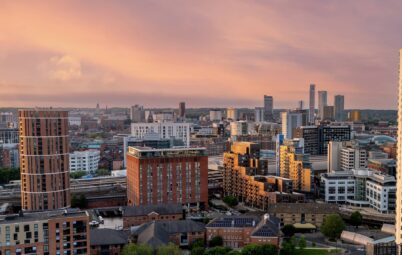
Birmingham is not a small secondary market offering low prices because of limited demand. It is one of the UK’s largest cities, with universities, hospitals, professional services, infrastructure projects and large-scale regeneration all contributing to housing need.
Affordability supports both entry and exit
One of Birmingham’s strengths is that its price point can appeal to several buyer groups.
First-time buyers paid an average of £213,000 in April 2026, while mortgaged buyers paid £241,000. This means investors are not relying only on other landlords when they eventually sell. Well-positioned properties may also attract owner-occupiers looking for an accessible route into a major city market.
That matters in a cautious recovery. A property market with a broad resale audience can offer better liquidity than one dependent on a narrow pool of highly leveraged investors.
Birmingham’s range of property types also creates flexibility. Flats averaged £147,000, terraced homes £222,000, semi-detached homes £276,000 and detached properties £447,000. This gives investors a wider choice of strategies, from lower-cost apartments to family housing in established residential areas.
Rental income adds weight to the case
The investment argument becomes stronger when Birmingham’s rental market is considered alongside purchase prices.
Average private rent in Birmingham reached £1,088 per month in May 2026, up 3.3% from a year earlier. One-bedroom homes averaged £821, two-bedroom properties £993 and three-bedroom homes £1,121.
This creates a positive relationship between entry price and income. Birmingham does not need extreme rental growth to remain attractive; it benefits from comparatively accessible capital values and a large tenant base.
The city’s rental demand is supported by students, graduates, public-sector workers, professionals, healthcare staff and families. That variety gives the market greater depth than locations dependent on one narrow tenant group.
A national recovery could reprice regional confidence
When the wider UK market starts to stabilise, investors often return to fundamentals. They look for cities with realistic entry prices, strong employment, rental demand and a visible development pipeline.
Birmingham fits that profile well. It offers exposure to a major regional economy while remaining more affordable than the national average.
According to TK Property Group, Birmingham’s strongest opportunity is the combination of major-city scale and accessible pricing, giving investors a way to benefit from renewed market confidence without the high entry costs seen in many southern locations.
Regeneration gives the city a growth runway
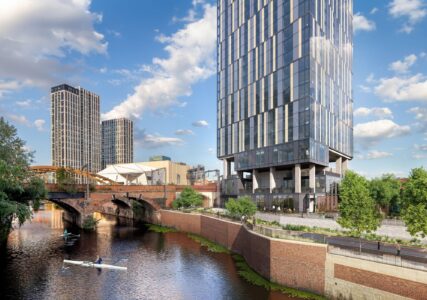
Birmingham’s investment case is not based only on current prices. The city is also preparing for substantial physical change.
The Birmingham Central Heart Prospectus sets out the potential for up to 5,000 homes, 8,000 jobs, more than 400,000 sq m of commercial floorspace and over seven hectares of public realm across underused city-centre sites.
Meanwhile, the Birmingham East Mayoral Development Corporation has been launched to drive an £11 billion regeneration programme. The plans include the potential for 20,000 homes and more than 50,000 jobs across one of the city’s most important growth corridors.
These programmes could strengthen demand by linking new homes with employment, transport, leisure and public-space improvements. For investors, that is a more compelling prospect than housing growth delivered in isolation.
The opportunity is in well-selected stock
Birmingham’s positive outlook does not mean every property will perform equally. The strongest opportunities are likely to be those where purchase price, rental demand and future resale appeal all align.
Important factors include:
- Access to employment and university districts.
- Reliable public transport connections.
- Realistic rents for the target tenant market.
- Good energy performance and manageable running costs.
- Clear resale appeal to investors or owner-occupiers.
- Proximity to regeneration that is funded or already progressing.
This is especially relevant in apartment-heavy locations, where service charges, building management and lease terms can materially affect net returns.
A major city still priced for participation
The return of UK house price growth is encouraging, but Birmingham’s appeal lies in the way it combines recovery potential with accessibility.
The city is large enough to support deep housing demand, yet its average price remains comfortably below the national figure. Rents are rising, regeneration is progressing and major development bodies are now focused on unlocking new homes and jobs.
For investors, Birmingham’s advantage is not simply that it is cheaper than many other markets. It is that the city offers a lower entry point into a large, economically important and changing urban market.
As national confidence improves, that combination of value, income and regeneration could make Birmingham one of the more compelling regional property markets to watch.