

6 September 2026

Liverpool is one of the UK’s most affordable cities and offers access to some of the country’s highest attainable rental yields. Major waterfront regeneration, strong demand from students and professionals, and continued city-centre development are supporting its long-term outlook. Investors can discover high-yield opportunities and off-market properties nearing completion, providing options suited to both income-led and capital-growth strategies.

Key Performance Indicators
£182,000
average house price in Liverpool
5.7%
average AST rental yields in Liverpool
+31.2%
5 year price growth forecast for the North West
+9.7%
annual rental growth
#3
third biggest undersupply of housing in the UK
£5.5bn
invested in the Liverpool Waters regeneration
Our Portfolio
Get In Touch
From acquisition to after-sales, our team covers every stage of your property journey. If you’re looking for tailored advice or have something specific in mind, we’re here to help you find the right solutions.
Why Choose Liverpool

 Market Summary
Liverpool stands out as a property investment market with affordable properties that can lead to stronger income potential. Property prices are projected to rise by 20% by 2026, supported by sustained demand, investor activity and extensive regeneration. Terraced homes have been among the strongest-performing property types, recording growth of more than 14.7% over the past year, while low vacancy rates continue to support the wider rental market.
 Yields
Rental performance is one of Liverpool's biggest advantages for investors, with yields commonly averaging around 7%-7.5%. These figures are supported by a broad tenant base that combines a substantial student population with young professionals seeking affordable city-centre living. Average monthly rents have increased by almost 10% annually, while higher-yield strategies are common around university districts and lower-priced residential areas where HMOs and shared accommodation provide excellent opportunities for investors.
 Regeneration
 Connectivity
 Areas Overview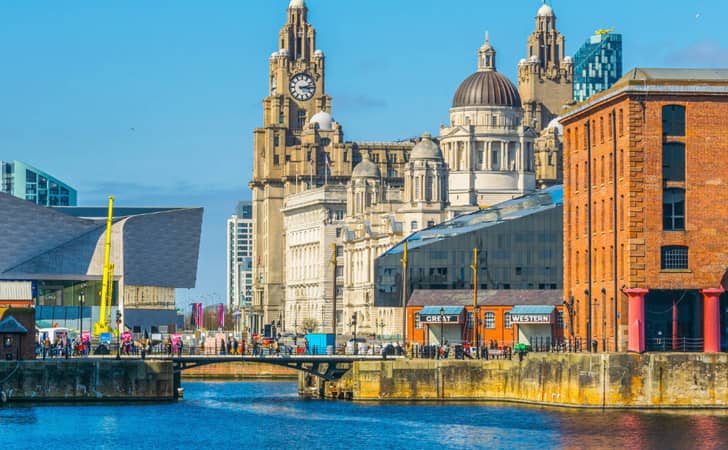
An Introduction To
Liverpool, a popular location in the North of England, provides the perfect environment for young professionals, students, and tourists. This vibrant and friendly city welcomes people of all ages and backgrounds. It is home to multiple world-class universities, boasts an exciting nightlife scene, and hosts several renowned international businesses, offering residents outstanding career prospects. With several reasons to relocate to Liverpool, ongoing regeneration projects, and a growing population, the demand for rental property continues to rise, making it an excellent hotspot for high-yield property investments.
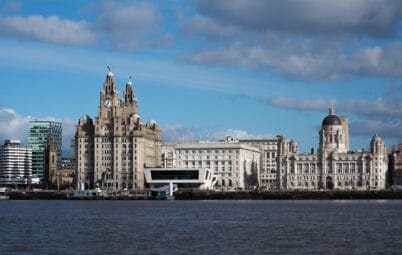
Liverpool has a rich, strong history, none perhaps more significant than its role as a valuable port city. The city's fame rose to new heights during the 1960s, when a local band, The Beatles, became one of the world's biggest musical acts. Nowadays, Liverpool is a prime tourist destination, attracting millions of visitors each year to enjoy its unparalleled leisure, shopping, music, sports, and entertainment. This well-connected city has many transport connections via road, rail, sea, and air, and is just a short 40-minute drive from Manchester. Liverpool is a great example of a city that has benefited from massive regeneration projects, and further redevelopment is underway to transform it even further.
Growth & Forecast
With a growing population and incredible regeneration, Liverpool’s property market has enjoyed several positive increases in the 2000s. Between 2010 and 2021, house prices increased by a whopping 45.7%. According to Rightmove, the average house price stands at around £228,106, a 9% increase from the 2022 peak. Semi-detached houses are the most expensive, with flats costing an average of £150,352.
While the recent movements have been positive, property specialists expect it will only improve for Liverpool moving forward. Liverpool’s emergence as a property investment hotspot can be attributed to several factors, including affordable living, strong property demand, and a young population.
Liverpool is one of the best places to invest in property, and the city’s price growth and forecast are evidence of that. So why not start your investment journey with us? Speak to an investment consultant at TK Property Group, and we will help you on the way to capital growth with high-yield investment opportunities.

A City Reimagined
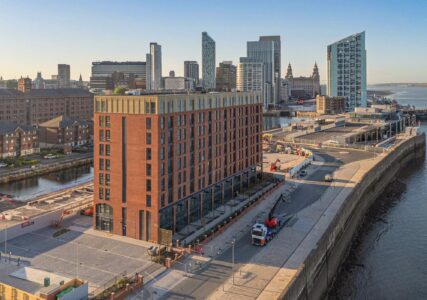
Liverpool has been transformed by regeneration, evolving into one of the UK’s most recognisable and vibrant city destinations. Following major redevelopment over the past two decades, the city has strengthened its economy, improved its waterfront, and expanded its retail, leisure, and residential offerings. The legacy of Liverpool’s European Capital of Culture year in 2008, alongside schemes such as Liverpool ONE and ongoing waterfront development, has helped reposition the city for long-term growth.
For property investors, Liverpool’s regeneration pipeline remains a major reason for continued interest in the city. New developments can meet demand from residents, students, professionals and visitors, while improving rental prospects in well-connected locations.
This section outlines some of Liverpool’s key regeneration highlights, including major past achievements and future projects that continue to shape the city’s investment appeal.


Neighbourhoods at a Glance
Liverpool is a diverse city with several brilliant areas suitable for modern and luxurious living. Whether living in North Liverpool, South Liverpool, or the city centre, residents will have easy access to everything they need. The city is primed to accommodate people of all preferences, including students seeking a lively lifestyle and young professionals seeking a quiet place to live outside of work. If you wish to invest in central property or a house on the city’s edge, endless opportunities are open to you.
Before deciding on your Liverpool property investment, we recommend you research the city’s vast areas. Liverpool’s various locations guarantee exceptional capital growth and ever-increasing demand for rental property.
In this section, we will help you discover the perfect investment by looking at some of Liverpool’s best areas to live.

The city centre is undoubtedly one of the best places to live in Liverpool, and property is highly affordable. The Georgian Quarter is perhaps the city’s most affluent and stunning area, boasting striking architecture. Several of Liverpool’s largest developments will bring more luxury apartments to the city centre. Liverpool city centre has everything you could want to enjoy the perfect lifestyle with key amenities and a bustling atmosphere within walking reach, making it the ideal spot for students and young professionals. Residents can enjoy world-class shopping, outstanding restaurants serving international cuisine, and exciting entertainment.
The Baltic Triangle is a thriving area that has undergone significant transformation within the last ten years. What was once a rundown part of Liverpool has now been dubbed one of the ‘coolest places to live in the UK’, according to The Times newspaper. The Baltic Triangle is a trendy destination that embraces art, creativity and heritage. This Liverpool area is home to everything from digital businesses to independent food traders, live music venues and eye-catching street art. With so much to see and do, it’s no wonder that people are choosing to live in this up-and-coming location. The Baltic Triangle has already welcomed several regeneration projects, and many more are on the way, including a host of modern properties.


North Liverpool is a large part of the city, comprising excellent neighbourhoods such as Anfield, Walton, Everton, Fazakerley, Aintree, and West Derby. The north of the town is very much the heartbeat of Liverpool, where community spirit is at the forefront. North Liverpool is one of the most affordable areas in the city for buying a property and living. Anfield Stadium and Goodison Park are here, attracting thousands of visitors each week. There is also a range of excellent green spaces, including Stanley Park, Everton Park and Croxteth Country Park. North Liverpool has a perfect mix of terraced houses, detached houses and apartments.
South Liverpool is a more affluent part of the city, home to some of its most expensive streets. Still, it remains an affordable place to live and is particularly popular among students and young professionals. This part of Liverpool includes areas such as Wavertree, Childwall, Allerton, Mossley Hill, Aigburth, and Speke. South Liverpool has everything from beautiful green spaces at Sefton Park and Calderstones Park to busy high streets and excellent leisure facilities. Lark Lane is a lively destination for gorgeous food and an unmissable nightlife scene. South Liverpool combines the best of quiet living with buoyant fun.
Stay Up To Date

Diversity Unfolded
Liverpool is home to a diverse and evolving population, and that is one of the key reasons the city continues to attract attention from property investors. While its large student population remains an important part of the local housing market, Liverpool’s demographic profile stretches far beyond its universities. The city is home to young professionals, long-term local residents, growing families, graduates who choose to stay after studying, and an increasing number of international residents drawn by education, employment and lifestyle opportunities.
A major driver of Liverpool’s changing population is its ability to attract younger age groups. With four well-known universities in the city, Liverpool brings in tens of thousands of students each year, many of whom contribute to the local economy long after graduation. Rather than leaving immediately, a significant number stay on to begin their careers, helping to grow the city’s base of young professionals and renters. This steady flow from student life into graduate living supports ongoing demand across different types of rental properties, from shared accommodation to modern city-centre apartments.
Affordability is another reason Liverpool’s demographics continue to shift. Compared with many other major UK cities, Liverpool offers a lower cost of living and more accessible rental prices, making it attractive not only to students but also to first-time renters, early-career professionals, and people relocating for work. For many, the city offers a balance that can be difficult to find elsewhere: strong amenities, a vibrant social scene, cultural appeal and career opportunities, without the higher housing costs seen in places such as London or parts of the South East.
Employment opportunities are also shaping who lives in Liverpool. The city has developed a broader economic base across sectors, including digital, creative, healthcare, life sciences, education, advanced manufacturing and professional services. As regeneration continues and investment flows into key parts of the city, Liverpool is becoming increasingly appealing to a workforce that wants both opportunity and affordability. This strengthens demand from tenants who are not just passing through for university, but are choosing to build their lives in the city over the longer term.
For property investors, this changing demographic picture is significant. Liverpool is not solely a student market; it is a city with multiple tenant groups that support rental demand year-round. That creates a more resilient investment story, with opportunities across student accommodation, private rentals and homes suited to young professionals and city residents seeking long-term flexibility. As Liverpool continues to evolve, its expanding population is likely to remain a major factor in the city’s strength as a property investment hotspot.
Get In Touch
Call us, or use the contact form to talk to a member of the team.
Our team will answer any questions you may have and check availability for you quickly. We are a whole of market, turnkey property consultancy and partner with major developers across the UK.
Interested in buy-to-let investment in the UK? Talk to our team.
Liverpool is a large, diverse city, so several areas are ideal for property investment. Some of the strongest rental yields are found in lower-priced areas close to the city centre, universities, and employment hubs. Areas like Anfield, Vauxhall, and Edge Hill can offer attractive income potential, while the city centre remains popular with investors targeting professionals and graduates. The best area ultimately depends on your budget, preferred tenant market, and whether you prioritise immediate rental income or long-term capital growth.
Liverpool’s long-term property outlook remains positive, although we can’t guarantee future price growth. In June 2026, average house prices reached around £185,000, up 7.2% year on year. Forecasts for the wider North West region continue to anticipate further growth in the coming years. Affordability, regeneration and ongoing demand for housing continue to contribute to Liverpool’s investment appeal.
Absolutely. Liverpool boasts one of the UK’s most thriving rental markets, thanks to a broad tenant base that includes students, graduates, young professionals, families, and people relocating for work. Average private rents reached £909 per month in July 2026, up 5.7% from the previous year.
Liverpool attracts a diverse range of tenants, from students to young professionals and beyond. Multiple universities create strong demand for student accommodation, while the city centre and surrounding areas attract graduates and young professionals seeking access to jobs, transport, restaurants, and leisure facilities. Families and longer-term residential tenants also provide demand across Liverpool’s established suburban areas, giving investors several tenant markets to consider.
Massive regeneration in recent decades has significantly increased the appeal of previously overlooked areas by bringing new homes, businesses, infrastructure, employment, and amenities. Liverpool has several major regeneration projects underway, including the transformation of the north waterfront through Liverpool Waters, along with investment in areas such as the Knowledge Quarter and North Liverpool. For investors, buying in or near regeneration areas can offer opportunities for long-term growth.
There is no single minimum amount to invest in Liverpool property, as it depends on several factors, including the type of property, location, and whether you are buying with cash or finance. Liverpool remains relatively affordable compared with many other major cities in the country. In June 2026, the average price for a flat in Liverpool was approximately £128,000. Other costs that investors should consider include the deposit, legal fees and property taxes.