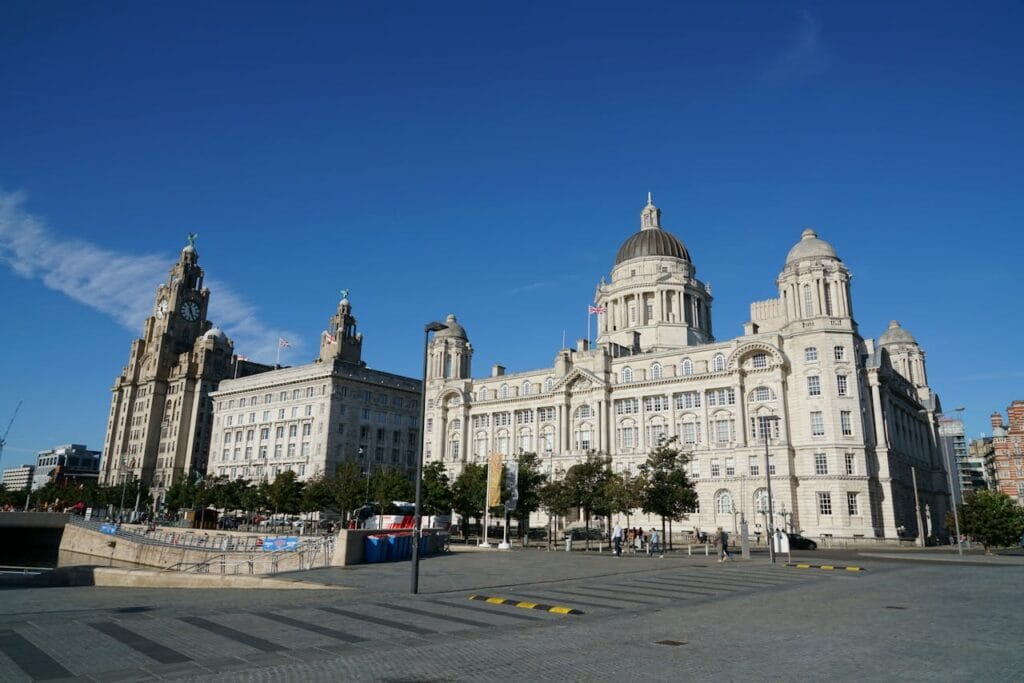

Liverpool City Region has unveiled a £2bn investment fund designed to accelerate growth, unlock development, and support jobs, housing, transport, and commercial space across the region.
The announcement was made by Mayor Steve Rotheram at MIPIM in Cannes, one of the world’s highest-profile property investment events, where city regions and developers compete for international attention and capital.
At its core, the fund is about bringing together new and existing public money into one investment pot, giving the city region more flexibility to move stalled schemes forward and make projects more investable. That matters because one of the biggest barriers to regeneration is not always a lack of ambition. More often, it is the gap between an idea and the infrastructure, site readiness, or confidence needed to get private money over the line.
For the property market, this is the kind of announcement that carries weight well beyond the headline number. A fund of this scale suggests Liverpool is not simply talking about long-term regeneration. It is trying to create the financial and political structure to make it happen.
Why this matters for property developers and investors
Large regional funds can change the pace of development when they are used to reduce risk in the right places. In practice, that can mean unlocking brownfield sites, improving transport links, helping deliver utilities or access works, or supporting the wider infrastructure that allows housing and commercial projects to stack up financially.
Liverpool City Region has made clear that the first wave of investment is expected to focus on high-quality office space in Liverpool city centre, alongside new lab space and industrial units across the wider region. That points to a strategy that is broader than residential delivery alone. It suggests a push to strengthen the city region as a place to work, innovate, manufacture, and scale businesses, rather than simply build homes in isolation.
That matters because the most resilient property markets tend to be supported by multiple demand drivers. Housing demand is stronger when job creation is strong. Office demand improves when business confidence rises. Industrial and logistics space becomes more attractive when infrastructure and connectivity are improving. A joined-up regional investment strategy can reinforce all of those parts at once.
Housing delivery could be one of the biggest winners
One of the clearest property angles in this announcement is housing. The fund is expected to support a £2bn development pipeline that could help deliver up to 64,000 new homes across the city region, with infrastructure included to support growing communities. That housing ambition sits alongside earlier announcements around a pipeline of more than 300 projects and £700m in funding for new social and affordable housing.
This is significant for several reasons.
First, supply remains one of the defining issues across many UK markets. Where delivery is constrained, affordability remains under pressure and growth can become uneven. Second, unlocking a large pipeline can support a wider mix of housing, from affordable homes through to private developments and regeneration-led residential schemes. Third, large-scale delivery often improves confidence among developers, landowners, and investors because it creates a stronger sense that a place has momentum.
Liverpool has long had compelling fundamentals as a regional market, but delivery has not always moved as quickly as potential would suggest. If this fund helps shift projects from plan to construction, it could support a stronger pipeline of residential opportunities over the next several years.
Commercial space is back in the conversation
A notable detail in the fund announcement is the emphasis on high-quality office development, likely including the proposed Pall Mall scheme in Liverpool’s commercial district, as well as new lab space and industrial accommodation. That is an important signal because it shows the city region is not retreating from commercial property ambitions. Instead, it appears to be prioritising better-quality, future-facing space.
This matters in a market where occupier expectations have changed. Businesses are more selective. Investors are more selective. Space that is well-located, energy-efficient, flexible, and aligned with modern demand has become much more attractive than secondary stock that struggles to compete.
If Liverpool can use public backing to support the right kind of commercial development, the wider effect could be substantial:
- stronger occupier confidence
- better conditions for inward investment
- greater support for knowledge-led sectors
- more balanced growth beyond residential delivery alone
For a regional city, that matters enormously. It is hard to create a truly dynamic property market without attractive places to work and invest.
Transport and regeneration could drive long-term value
The fund is also expected to support major transport improvements, including four new rail stations, a rapid transit system, and transport-linked development. This could prove just as important as the property-specific elements. Transport infrastructure often shapes land values, development viability, and investor appetite more than headline market sentiment alone.
When connectivity improves, catchment areas expand. Locations that were previously seen as secondary can become more attractive. Residential schemes gain appeal because commuting becomes easier. Commercial districts benefit from stronger links to talent and customers. Over time, infrastructure can change the geography of growth.
For Liverpool City Region, the combination of housing, commercial investment, and transport planning creates a more convincing long-term story than any one initiative on its own. Regeneration is rarely about a single scheme. It is about building the conditions for confidence at scale.