
Liverpool’s property story over the last decade has often centred on the visible: waterfront towers, the commercial district, and headline regeneration schemes. But one of the most important growth levers sits slightly further north, in a part of the city that has been effectively closed off from everyday life for decades.
That area is Central Docks—a vast stretch within Liverpool Waters, where plans are now moving from long-term vision to practical delivery through a combination of planning approvals, enabling infrastructure, and major government-backed funding.
For Liverpool’s housing market, this matters because large brownfield sites don’t just add new homes. When they’re delivered well, they can reshape demand patterns, connect neighbourhoods, create new amenity “gravity,” and widen the appeal of adjacent districts.
Central Docks in context: one of the largest opportunities in the city
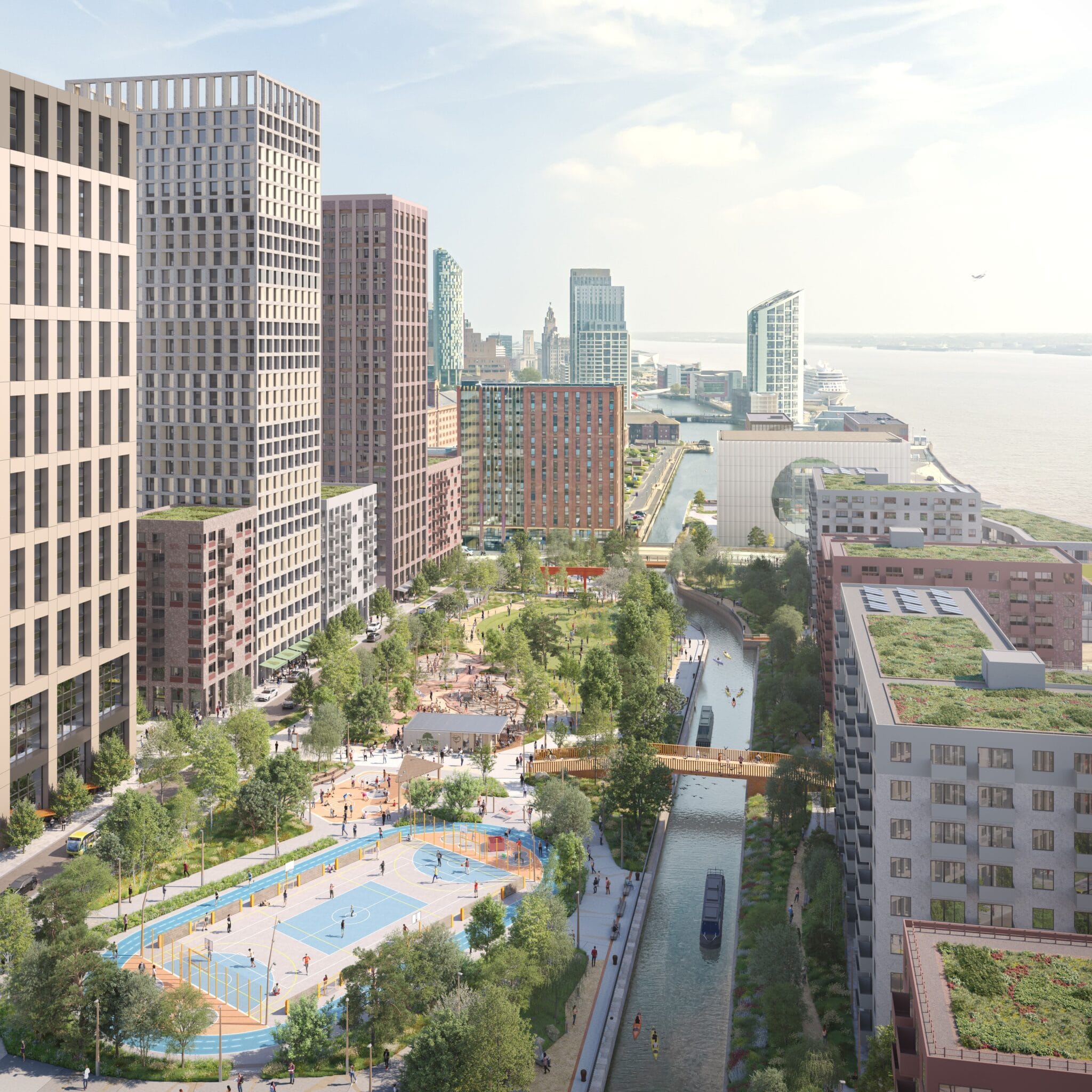
Central Docks is described as a key neighbourhood within Liverpool Waters and part of one of Europe’s largest regeneration projects, with planning-ready plots intended for residential, commercial, leisure, and community-led development.
The scale is important. Liverpool’s growth isn’t constrained by a lack of interest—it’s constrained by deliverable land, infrastructure capacity, and high-quality placemaking. Central Docks directly addresses those constraints, because its next phase is being built around the basics that make a new district work: public realm, utilities, transport integration, and credible green space.
Central Park: green space as the anchor, not an afterthought
A standout component is Central Park, planned at 4.7 acres and positioned as a major new public green space within the Central Docks neighbourhood.
The park matters for the property market for a simple reason: in city-core living, amenity drives desirability. Buyers and renters increasingly compare neighbourhoods based on walkability, green space, and lifestyle infrastructure—not just proximity to the city centre.
When a regeneration scheme leads with a substantial public park, it tends to:
- lift perceived quality of place (not just “new buildings”)
- support stronger rental demand for nearby stock
- help the area feel “liveable” earlier in the delivery timeline
- create a destination effect that benefits surrounding streets
Homes England £56m funding: a practical sign that delivery is being unlocked
Momentum is also being driven by a £56m investment from Homes England, which has received final approval from HM Treasury. This funding is explicitly framed as supporting the creation of a new public park and vital enabling infrastructure to accommodate approximately 2,350 new homes.
This is significant because infrastructure funding is often what separates “masterplan ambition” from “shovels in the ground.” Large dockland sites typically require costly remediation, utilities, access routes, and public realm works before residential delivery can scale. Funding targeted at those enabling works can materially accelerate the timeline and reduce delivery risk.
2,350 homes: what this scale can do to Liverpool’s housing mix
The figure of around 2,350 new homes within the Central Docks plan is large enough to influence the city’s supply dynamics—particularly if delivery is phased effectively and matched to demand across tenure types.
For Liverpool, the strategic importance is less about the total number and more about where that number sits:
- close enough to the city centre to benefit from employment, universities, and visitor economy footfall
- within a wider waterfront regeneration zone that already carries a strong “city brand”
- adjacent to major projects and transport corridors shaping North Liverpool’s next decade
Done well, this kind of development can strengthen Liverpool’s position as a city-centre living market with depth—rather than a city with a small cluster of premium stock surrounded by disconnected pockets.
Why “locked away” land tends to change demand patterns
When previously inaccessible land re-enters the city’s usable footprint, three things often happen:
- The city expands in practice, not just on a map
- New routes, public realm, and connectivity make areas feel closer and more relevant to daily living.
- Neighbourhood perception shifts
Places that were once “edge” become “next,” especially if the public realm and amenities land early.
Adjacent districts often benefit first
Before the new homes are even complete, nearby areas can see increased interest because buyers anticipate improved infrastructure and placemaking.
Central Docks fits this pattern precisely because the plan isn’t just housing—it’s housing supported by a major park and enabling works designed to bring the district into everyday use.
The Liverpool property takeaway
Liverpool’s strongest long-term gains tend to come when regeneration is joined up: not a single tower, not a single street, but a district-level change in liveability and connectivity. Central Docks is one of the clearest examples of that kind of opportunity.
With:
- an anchored public park plan (Central Park)
- funding to unlock enabling infrastructure and support ~2,350 homes
- and a defined position within the Liverpool Waters regeneration framework
…Central Docks increasingly looks like a project that could shape Liverpool’s housing narrative for years, particularly across the city’s northern waterfront and connected neighbourhoods.