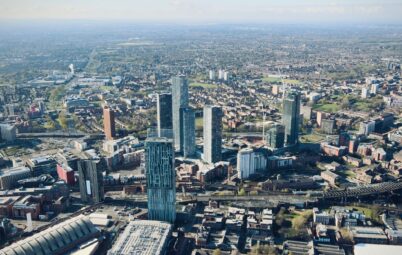

Manchester has spent the last decade building a reputation as one of the UK’s strongest regional property markets. Here is what the current data shows, and what it means if you are weighing up the city for investment.
Current Market Overview
According to the Office for National Statistics, the average house price in Manchester reached £251,000 in June 2026, up 2.9% year on year, slightly behind the North West’s 4.7% rise over the same period. Average private rent in the city climbed to £1,365 in July 2026, a 3.8% annual increase, ahead of both the North West and UK averages.
That combination, rents rising faster than prices, tends to point to a market where rental demand is outpacing supply, which is generally a positive signal for buy-to-let investors focused on income rather than short-term capital growth.
Rental Yields Across Manchester
Manchester’s rental yields typically range between 5% and 7%, with some city centre apartments and student-focused areas pushing higher. Yields vary meaningfully by area: central postcodes such as M1 and M2 tend to offer stronger capital growth with more modest yields around 4.5-5.2%, while student-led suburbs such as M14 typically deliver the strongest gross returns, reflecting Manchester’s position as one of the UK’s largest student cities with over 100,000 students and a graduate retention rate of around 51%.
Areas Seeing the Strongest Investor Demand
- City centre (M1, M2, M3) – Strong, stable tenant demand from professionals and corporate relocations, with low void risk.
- MediaCityUK and Salford Quays – Continued growth from major employers and ongoing regeneration.
- Ancoats and New Islington – One of the fastest-growing areas for both price growth and rental demand.
- Victoria North – A regeneration project set to deliver 15,000 new homes over the next 15-20 years, reshaping the wider city centre fringe.
Regeneration and Infrastructure Driving Growth
Manchester’s case as a long-term investment location rests heavily on regeneration and transport. Victoria North, the Northern Gateway and continued expansion around MediaCityUK are reshaping the city’s investment landscape, while upgrades to the Bee Network transport system are improving connectivity across the wider city region. Manchester’s city centre population is on track to reach around 100,000 residents, and the regeneration pipeline is adding new homes without closing the underlying supply and demand gap, a key driver of both rental demand and price growth in the Manchester buy-to-let market.
Manchester Property Market Outlook
Forecasters remain broadly positive on Manchester through to 2030, with cumulative price growth over the next five years estimated in the region of 25-30% under central scenarios. That view is underpinned by continued population growth, a deep graduate talent pool and sustained regeneration investment. As with any regional forecast, investors should weigh this against their own goals and risk appetite rather than treat it as guaranteed. For more detail on yields and areas by postcode, see our full Manchester property investment guide.
How TK Property Group Can Help
We hold the No.1 Rightmove market share in Manchester and have delivered over £250m in GDV to date, working with a database of 70,000+ investors across more than 30 countries. If you are comparing Manchester against other UK cities, or want to talk through current stock and expected yields, book a free consultation with our team.