
What if, before buying shares, you could see in advance which companies were going to increase in value and which were going to lose momentum?
What if, before going to the supermarket, you had access to information showing which products would be cheaper the following day and which ones would be better to buy today, before inflation affects their prices?
Unfortunately, we do not yet have the technology to see the future of the stock market or the prices on supermarket shelves. But the good news for investors is that, in the property market, it is possible to identify in advance which areas of a city are likely to increase in value, positively affecting nearby properties. This “crystal ball” involves neither magic nor advanced tools. We are talking about the good old development pipeline.
What is a development pipeline?
In urban growth, a development pipeline is the collection of property constructions planned or already underway in a particular area.
It usually includes projects at different stages:
- land acquired or under assessment;
- proposed project;
- planning permission and approval;
- financing;
- construction;
- completion and delivery.
For example, if a city has 20,000 new homes in its pipeline, this means that these units are planned or in development (not necessarily that all of them will be built). Some may be delayed or cancelled.
The development pipeline helps to assess:
- how much a city is expected to grow;
- the future supply of homes, offices, or shops;
- the need for transport, schools, and services;
- the potential effects on property prices and rents;
- where further construction and investment are likely to take place.
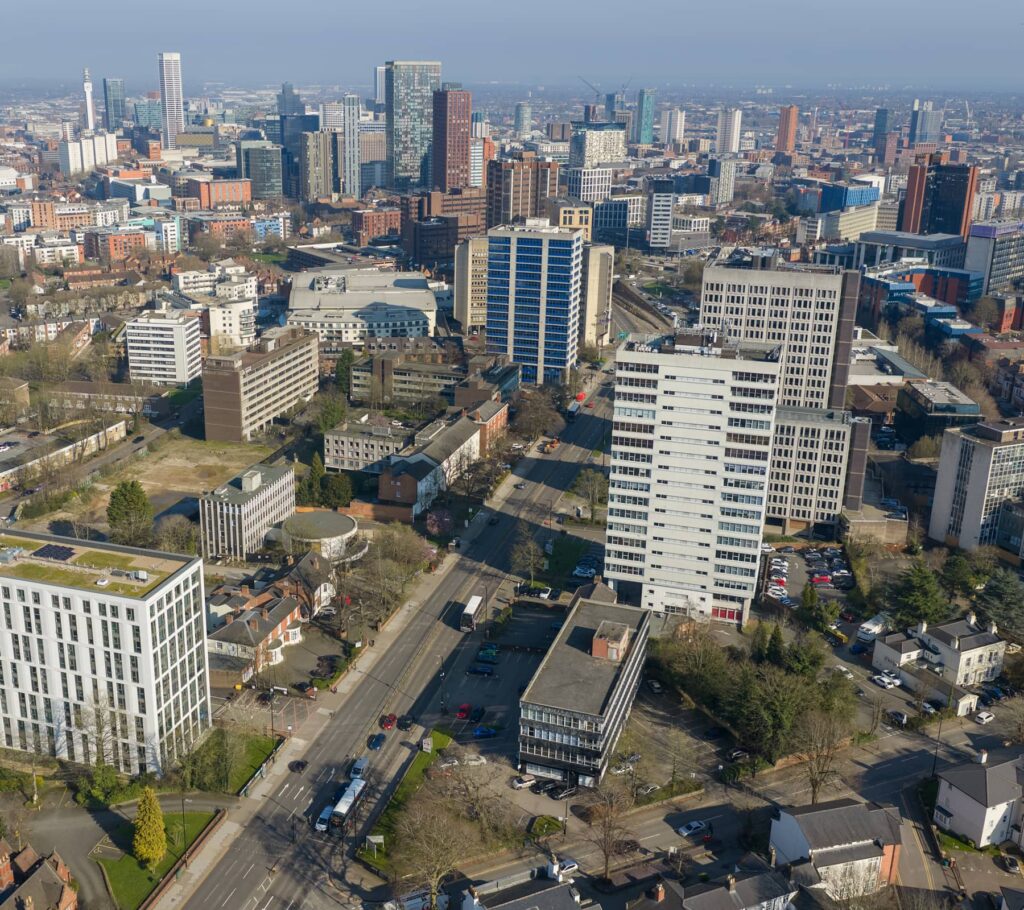
In any city, the pipeline offers a glimpse into its future, and Birmingham is no different. By looking at it, we can see where new homes, workplaces, transport links, and amenities are expected to emerge.
What is coming and where
While in many cities, the development pipeline tends to come in waves, concentrated in one or two areas, in Birmingham, these projects are spread across several parts of the city and are happening at the same time.
This is the case, for example, in Digbeth, Smithfield, and Park Birmingham.
According to Birmingham City Council, planned housing schemes include over 11,000 homes in these neighbourhoods.
Digbeth is a particularly interesting case. The area currently has around 3,000 households, with more than 6,000 additional dwellings in the pipeline. This development will triple the number of homes in the neighbourhood. Alongside these houses and apartments, around 300,000 square metres of commercial space is also planned.
Smithfield and Park Birmingham, on the other hand, are development zones that do not yet have an officially recorded population.
Smithfield will undergo a major urban transformation. The plans include new leisure and cultural spaces, a dedicated events square, landscaped green areas, upgrades to public transport, and the construction of more than 3,000 homes. Scheduled for completion in 2035, the project is expected to attract approximately US$3.7 billion in investment.
Park Birmingham, in turn, is set to become a new urban hub, creating approximately 8,000 jobs and delivering at least 2,100 homes. The project will include 117,500 square metres of offices, workspaces, restaurants and cafés, as well as a 200-room hotel. Around 10,000 square metres of public space will also be created, including two squares, streets, and an avenue connecting the area to the future HS2 Curzon Street station.
Meanwhile, a £2.5 billion regeneration project in Ladywood could deliver up to 12,000 homes, although the proposed scale remains subject to the masterplanning process.
All these figures are small portals into the future, showing investors where the Birmingham property investment market is heading.
New housing supply can influence rental performance
A growing development pipeline can indicate confidence in a city’s housing market. However, it also reveals how much additional stock could become available.
Imagine purchasing a new-build apartment in an area where several thousand similar properties are scheduled for completion within a relatively short period.
When these developments enter the rental market, landlords may face increased competition for tenants, particularly if multiple buildings offer comparable apartments and amenities.
This could affect achievable rents, occupancy levels, and the time required to find tenants.
On the other hand, new homes arriving alongside additional employment opportunities and improved transport connections could benefit from growing demand.
The important question is whether local rental demand can absorb the expected increase in supply.
Before committing to an investment, examine the number of properties already available, upcoming completions, and rental performance in comparable developments.
Better connectivity can expand the tenant pool
Transport is another important consideration.
The planned HS2 Curzon Street Station is expected to improve connections between Birmingham and London. Its surrounding regeneration programme also includes opportunities for new homes, commercial space, and employment.
For residential investors, improved transport links could expand the pool of potential tenants by making employment centres and surrounding neighbourhoods easier to access.
Infrastructure projects can also encourage businesses to establish themselves nearby, potentially supporting demand for housing.
Nevertheless, investors should distinguish between existing transport services and improvements scheduled for delivery. A property investment should remain financially viable under current conditions, with infrastructure improvements treated as potential additional benefits.
Use the pipeline to make informed decisions
Understanding Birmingham’s development pipeline requires looking beyond the number of cranes on the skyline.
Investors should examine how individual projects fit into the wider neighbourhood and whether the anticipated changes support their investment objectives.
Useful questions include:
- How many competing residential units are scheduled for completion nearby?
- Which regeneration projects have secured funding and planning permission?
- Will new employment opportunities support rental demand?
- What infrastructure and amenities will be available when the property is completed?
- How might construction activity affect tenants and rental income?
These considerations can help investors distinguish between an attractive marketing proposition and an opportunity supported by realistic assumptions.