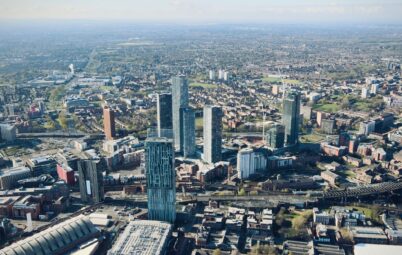
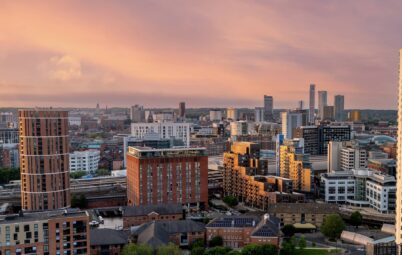
Why Manchester Is Proving More Resilient Than Many UK Housing Markets In 2026

Manchester is continuing to show notable resilience in 2026, even as the wider UK housing market loses pace.

National growth is much more restrained than it was during earlier upswings, with the average UK house price reaching £268,000 in February 2026, only slightly above the previous year. Manchester, by contrast, recorded an average house price of £251,000 in February 2026, up 3.9% year on year, which was stronger than both the UK and North West annual growth rates. That makes the city one of the clearer examples of a regional market still finding traction while the broader national picture becomes more cautious. ONS housing data for Manchester shows that local outperformance clearly.

This is significant because stronger performance in a cooler market tends to say more than strong performance in a boom. When national conditions become flatter, markets with genuine local support usually start to separate themselves from places that had previously relied more on momentum alone. Manchester appears to be in that first category. Its growth is being supported by the kind of fundamentals that still matter when buyers and investors become more careful: a large urban economy, a broad base of housing demand, comparatively workable pricing and an established rental sector.

Manchester is benefiting from a more selective market

The current housing market is increasingly defined by selectivity. Activity has not disappeared, but the pace is more measured, and decisions are more value-conscious. Government data for February 2026 showed seasonally adjusted residential transactions at 102,000, down 5.6% compared with a year earlier, which underlines the more subdued tone of the market nationally. In that kind of environment, stronger-performing cities are usually the ones where the practical case for buying still stacks up.

Manchester benefits from that shift because it offers scale without the same pricing pressure seen in many higher-value parts of the country. It remains a major city with strong employment, transport links, education demand and national visibility, yet it still sits below the UK average on price. That middle-ground position matters more when the market cools. Buyers and investors are less willing to stretch for prestige alone, and more likely to favour places where the numbers still feel defensible.

According to TK Property Group, this is one reason Manchester continues to stand out. It is not simply a city that performed well during a stronger cycle. It is one that still makes sense in a slower, more selective market because demand is being supported by a broader urban economy rather than one narrow housing story.

Price growth is still ahead of the national picture

The strongest signal of Manchester’s resilience is the city’s house price growth relative to the national backdrop. The average house price in Manchester rose to £251,000 in February 2026, a 3.9% annual increase. Across the UK, the average was £268,000, but national growth was much more subdued. Manchester’s rate was also ahead of the North West annual increase of 3.4%. That matters because it shows the city is not only growing, but growing faster than its wider region and the national market. Manchester’s latest house price figures highlight that relative strength.

The detail underneath the city average also helps. Semi-detached homes in Manchester recorded annual growth of 6.2% in February 2026, while flats and maisonettes increased by 1.2%. That suggests there is still active demand across multiple parts of the market, even if not every property type is moving at the same speed. In a cooling market, variation like that is normal. What matters more is that the overall city trend remains positive.

This is not the profile of a market in retreat. It is the profile of a city where housing demand is still working through the system, even though the wider UK market has become more restrained.

Relative affordability is helping support activity

Manchester’s resilience also comes back to pricing. The city is large, economically important and well known, but it is still not priced at the same level as many competing urban markets. That creates room for activity to continue when buyers start paying closer attention to value. First-time buyers in Manchester paid an average of £236,000 in February 2026, compared with £259,000 across the North West and £329,000 in Great Britain. That gap is meaningful because it shows Manchester can still feel accessible relative to broader benchmarks, particularly for buyers who want a major-city market without southern-style entry costs.

Affordability becomes even more important when growth cools. In faster markets, buyers may accept higher prices if they believe strong appreciation will justify the stretch. In calmer conditions, that logic weakens. Markets that continue performing tend to be those where purchase prices still align more convincingly with incomes, rents and long-term confidence.

Manchester’s affordability advantage is not about being cheap. It is about being comparatively attainable for a city of its scale. That helps support:

  • first-time buyer demand
  • investor confidence where pricing still works against rent
  • continued activity in a flatter national market
  • a stronger value case than many higher-priced locations

That blend of city status and relative accessibility is one of the reasons Manchester has held up well.


Want to Get the Latest Blogs Before They're Published?

Sign up now to stay informed.

Please provide a valid email address.
Contact Us