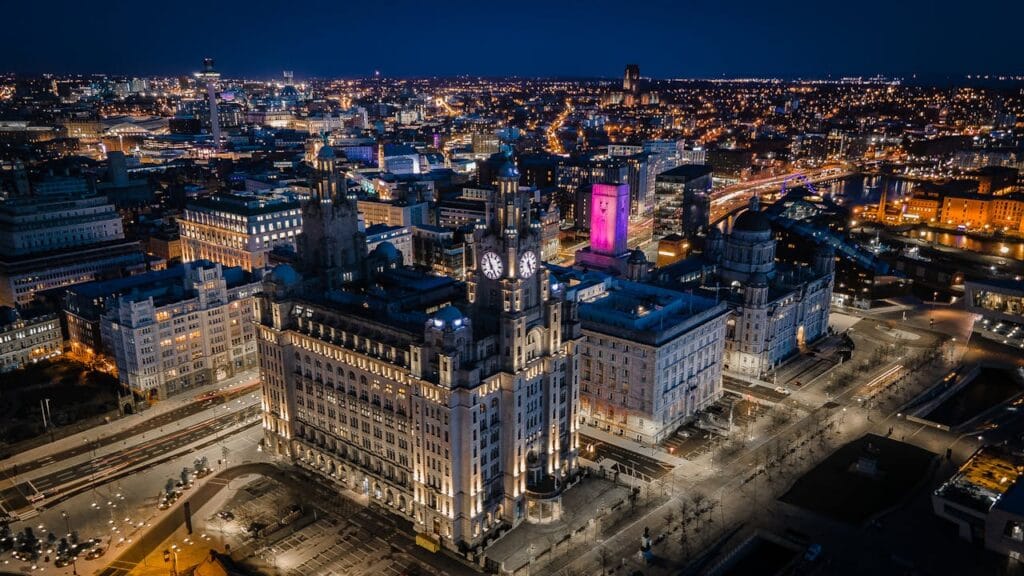

Plans for a 70-storey tower at the £1bn Kings development have brought fresh attention to Liverpool’s waterfront and the next phase of the city’s regeneration story. At a proposed height of 221.5 metres, the building would overtake West Tower, which currently stands at 140 metres, and become the city’s tallest building. The scheme is being positioned as a mixed-use landmark containing a five-star hotel and high-end residences, making it far more than a simple skyline gesture.
That matters because landmark towers tend to signal something broader than architectural ambition. In property terms, they are often used to communicate confidence, attract outside attention, and reframe how a city is perceived by investors, occupiers, and developers. Liverpool has seen major regeneration over the years, but this proposal feels different in scale and visibility. It is designed to stand as a centrepiece within a much larger waterfront transformation rather than as a standalone tall building.
The tower is only part of a much bigger regeneration picture
The proposed skyscraper sits within the wider Kings masterplan, an eight-acre waterfront scheme expected to include multiple buildings, public realm improvements, and a phased transformation of land north of the Pier Head. Recent reporting indicates the first phase, No. 1 Kings, a 28-storey residential tower, has already secured planning approval. That is important because it suggests the project is moving beyond concept imagery and into the early stages of real delivery.
Even more importantly, the tower is emerging at a time when Liverpool’s northern waterfront is becoming a much bigger strategic priority. The Liverpool City Region Combined Authority has identified the area as a focus for its proposed Mayoral Development Corporation, with key projects including the Central Docks neighbourhood, the Kings scheme, Pall Mall, and wider dockside regeneration. In other words, the proposed skyscraper is not appearing in isolation. It is part of a wider public and private push to accelerate development across Liverpool’s northern edge.
Why a record-breaking tower matters for property
Tall buildings do not automatically create a strong property market. What they can do, however, is concentrate attention. For Liverpool, that could be valuable. A city that is already well known for heritage, tourism, and waterfront character is now increasingly presenting itself as a place with large-scale modern development ambitions as well.
That change in perception can matter. Investors often respond not just to current numbers but to narrative. A high-profile tower, especially one attached to a luxury hotel and residential offer, can help signal that a city is moving into a different phase of confidence. It can also reinforce the idea that major private-sector players believe there is sufficient long-term demand to justify premium schemes on prominent sites.
In Liverpool’s case, the proposal also aligns with a much larger development story already under way at Liverpool Waters, a £5bn regeneration project spanning the northern docks. Recent updates show active progress across the area, including work starting at Central Docks and the official opening of new residential schemes such as Lighthaus. That wider backdrop makes the new tower feel like part of growing momentum rather than an isolated symbol.
Liverpool’s growth story is becoming more ambitious
Liverpool City Region is not only promoting individual schemes. It is increasingly presenting a broader investment proposition. Ahead of MIPIM 2026, the city region said it would showcase an £11bn pipeline of opportunities, including Liverpool Waters, North Docks regeneration, life sciences space, and major mixed-use projects. That matters because it shows how the proposed tower fits into a much wider pitch about growth, infrastructure, and investable places.
There is also substantial enabling work under way nearby. The Central Docks infrastructure programme carries more than £81m of backing, including around £55m from Homes England and £26m from Peel Waters, aimed at preparing one of the largest brownfield opportunities in the area. Schemes like this do not generate the same headlines as a supertall tower, but they are often what make wider regeneration viable. Roads, utilities, public space, and site readiness all matter just as much as eye-catching architecture when it comes to unlocking long-term value.
What this could mean for residential demand
From a residential perspective, the proposed tower speaks to a more premium layer of the Liverpool market. The scheme is not aimed at solving mainstream housing need. Instead, it appears designed to elevate the city’s high-end offer, attract affluent buyers, and support a more internationally recognisable waterfront identity. That can still have a wider effect on perception, especially if it encourages more confidence in surrounding districts and future phases of regeneration.
Liverpool’s waterfront has long been one of its defining assets, but not all of that potential has been fully converted into modern residential scale. A building of this height and profile suggests the city is becoming more comfortable with denser, more ambitious forms of urban development in the right locations. If delivered well, that could help strengthen Liverpool’s appeal to both domestic and overseas buyers looking for a city with more growth headroom than some of the UK’s more mature regional markets. This is an inference based on the scale and positioning of the scheme alongside the region’s investment strategy.
According to TK Property Group, projects like this tend to matter most when they are not viewed as isolated trophies, but as part of a broader cycle of place-making, investment confidence, and infrastructure-led regeneration.