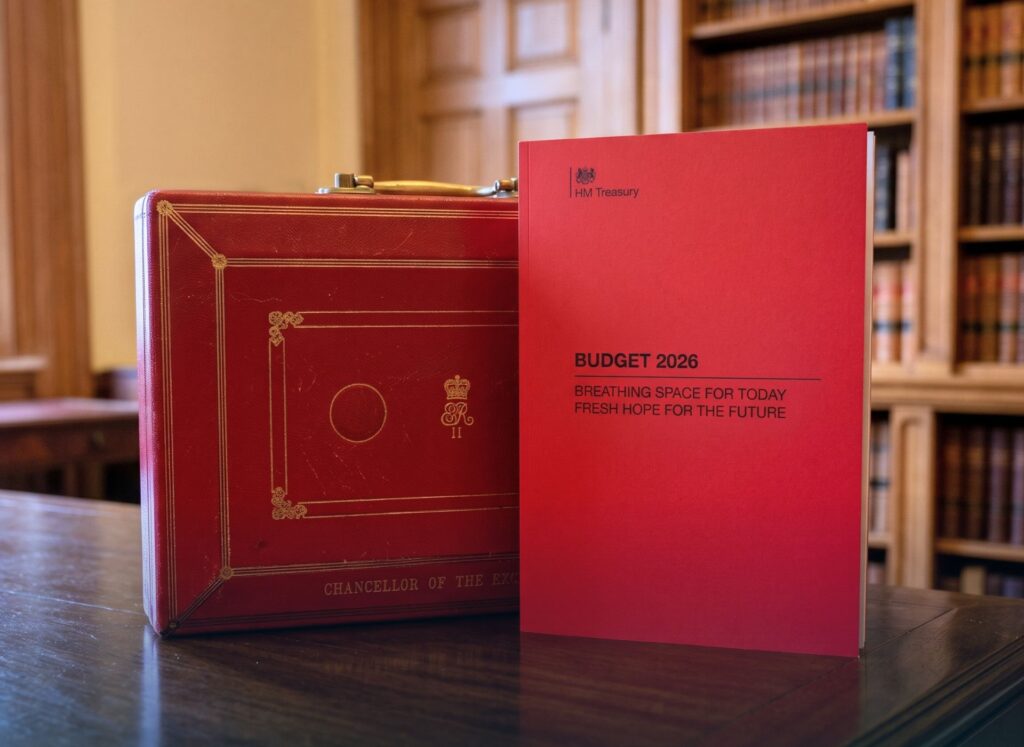

Chancellor John Healey has delivered his first Budget, billing it as a Budget for the working people of Britain and a Budget for business, with a promise of innovation and growth in every postcode. Energy bills and the cost of living dominated the speech. For the property market, the bigger story is what did not change: no rise in income tax, National Insurance or VAT, no change to stamp duty and no Capital Gains Tax hike.
Autumn Budget 2026: the key points
- No rise in the main taxes. Labour’s manifesto promise on income tax, National Insurance and VAT has been kept, with every policy fully funded.
- £100 household energy payment. Around 20 million households in council tax bands A to D will receive £100 this winter.
- Energy bill VAT cut extended. The cut now runs through the winter until July 2027, and gas standing charges are set to be removed next year.
- Fuel duty cut extended. The 5p per litre cut continues until July 2027.
- Bigger small business rate relief. The threshold rises from £12,000 to £18,000 from April next year.
- No change to stamp duty or Capital Gains Tax. The landlord income tax rise still goes ahead from April 2027.
- Growth downgraded for 2027. The OBR now expects 1.2% growth this year and 1.0% next year, citing the war in the Middle East.
This was the first Budget of Andy Burnham’s premiership and Healey’s first since replacing Rachel Reeves as Chancellor in July. Here is what was announced, what stays the same and what it means for anyone buying, selling or investing in UK property.
What Healey announced in the Autumn Budget 2026
Healey framed the Budget around stability. He confirmed the government is sticking to its fiscal rules, kept Labour’s manifesto pledge not to raise taxes on working people, and said every new policy is fully funded.
The centrepiece was energy. Healey announced a new energy wealth fund for the UK, aimed at bringing British energy costs down in line with the rest of Europe, with clean power at the heart of the plan. He said the government remains deeply committed to net zero by 2050.
For households, the key measures are:
- £100 household energy payment for around 20 million households in council tax bands A to D this winter, part of a £2.6bn scheme.
- VAT cut on energy bills extended through the winter until July 2027, with payments backdated for this year.
- Gas standing charges removed from bills from next year, delivered through Ofgem.
- 5p per litre fuel duty cut extended until July 2027.
- Tariffs suspended on more than 100 supermarket products.
For businesses, small business rate relief will rise from £12,000 to £18,000 from April next year, taking around 70,000 more businesses out of business rates altogether. Healey also said no business will face an above-inflation rise in rates for the next two years, and online marketplaces will face stronger rules to make sure they pay VAT.
Inflation, interest rates and the OBR forecast
The Office for Budget Responsibility said the war in the Middle East is a key driver of its forecasts. Inflation has risen, pushed up by higher oil and gas prices, and the OBR has cut its growth forecast for 2027 to 1.0%, down from 1.6% in March. It now expects growth of 1.2% this year, before recovering to 1.6% in 2028.
For the property market, this matters because of what it means for mortgage rates. Lenders price fixed-rate deals from swap rates, which follow gilt yields and expectations for the Bank of England base rate. With inflation pushed up by energy prices, rate cuts may take longer to arrive, so borrowers should plan for rates staying higher for longer.
The energy measures could help on both fronts. Lower bills ease pressure on household budgets and tenants’ ability to pay rent, and anything that brings energy-driven inflation down gives the Bank of England more room to cut rates.
How Budget speculation slowed the property market
Very few property changes were expected today, yet the Budget had already shaped the market long before Healey stood up in the Commons.
Research from House Buyer Bureau, reported by The Intermediary, found that 27% of homebuyers had already paused their search until after the Budget, with a further 21% undecided. Almost one in five said they were specifically waiting to see whether stamp duty would change, while mortgage rates were the single biggest concern.
Those buyers were not idle. Most had already been browsing, contacting agents or attending viewings before deciding to wait. Average UK house prices rose 1.4% in the year to July 2026, according to the UK House Price Index, down from 2.8% a year earlier.
With the Budget now delivered, that wait is over. For many buyers and investors, the certainty matters as much as anything in the speech.
Stamp duty: no changes in the Autumn Budget 2026
Despite calls from agents and conveyancers for targeted relief, no changes to stamp duty were announced. That means the current residential stamp duty rates remain in place:
- Home movers pay nothing on the first £125,000.
- First-time buyers pay nothing up to £300,000 on homes worth up to £500,000.
- Investors and second home buyers continue to pay the 5% surcharge on top of standard rates.
For investors, the lack of change is not necessarily bad news. Previous stamp duty holidays have often been absorbed into higher asking prices, and a stable regime makes it easier to plan purchases and calculate returns. You can model your costs using our property investment calculators.
Your First Home: help for first-time buyers
The Budget follows the launch of Your First Home, announced by Andy Burnham on 26 September ahead of Labour’s conference in Liverpool. The scheme is a government-backed equity loan for first-time buyers purchasing a new-build home in England:
- 2.5% minimum deposit, with the government lending up to 20% of the purchase price.
- Household income and local property price caps, to target support at those who need it most.
- A 15% deposit cap, so buyers with substantial savings cannot use the scheme.
- An initial interest-free period on the equity loan.
- Pre-registration due to open by the end of 2026.
Experts including Yopa chief executive Verona Frankish have warned that boosting demand without enough new supply risks pushing prices higher, while others argue the scheme’s success depends on how much of the cost falls on developers, a point covered in detail by Mortgage Introducer.
Why it matters for investors: first-time buyers are the natural resale market for new-build one and two bedroom apartments. In regional cities such as Manchester, Birmingham and Liverpool, where new-build prices sit well below London levels, a larger pool of supported buyers could strengthen demand and resale liquidity for the type of stock investors typically hold.
Landlords and buy-to-let: what changes and when
There was no fresh tax raid on landlords today. However, the property income tax increase announced in the 2025 Budget is now law and takes effect from 6 April 2027. Rental profits will be taxed at their own rates, two percentage points above standard income tax.
| Tax band | Rate until 5 April 2027 | Rate from 6 April 2027 | Extra tax per £10,000 profit |
|---|---|---|---|
| Basic rate | 20% | 22% | £200 |
| Higher rate | 40% | 42% | £200 |
| Additional rate | 45% | 47% | £200 |
Alongside this, Making Tax Digital for Income Tax extends to landlords with qualifying income over £30,000 from April 2027.
The good news for investors is that Capital Gains Tax was left untouched. In the run-up to the Budget there was speculation that CGT could be aligned with income tax rates, taking the top rate as high as 45%, but the Chancellor ruled out a rise. Residential property gains remain taxed at 18% and 24%, which protects the exit value of long-term portfolios.
As individual landlords face higher income tax on rent from 2027, more investors are likely to review how their property is held. Our guide to investing through a limited company explains the pros and cons, and our buy-to-let mortgage team can help you compare personal and limited company lending.
The energy measures are also worth noting for landlords. The £100 payment and lower bills support tenants’ household budgets, while the government’s push towards clean power and net zero by 2050 keeps energy efficiency high on the agenda for rental property.
Keep watching the market, not just the Budget
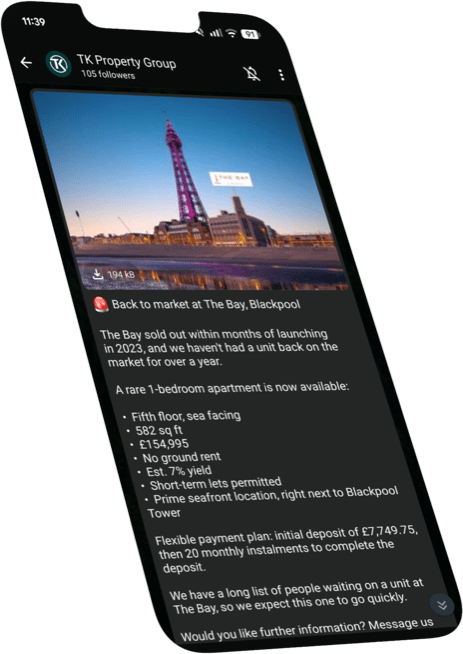
The best deals often never reach the open market. Join our Investor Channel on WhatsApp to be first to hear about new launches, exclusive incentives, back-to-market units and the latest property market news.
 Join the Channel
Mansion tax: threshold held at £2 million
The High Value Council Tax Surcharge, often called the mansion tax, still applies to homes in England worth £2 million or more from April 2028. The Chancellor had ruled out lowering the threshold to £1.5 million.
The surcharge is an ongoing annual cost rather than a one-off purchase tax, so it is most relevant to prime London and South East property. For investors in the North West and Midlands, it has little practical impact. The average home in Manchester costs around £251,000, according to our Manchester property investment guide, which is a fraction of the threshold.
Business rates: relief for small firms
From April next year, the small business rate relief threshold rises from £12,000 to £18,000, taking around 70,000 more businesses out of business rates entirely. No business will face an above-inflation rise in rates for the next two years.
For investors in mixed-use and commercial property, lower costs for small occupiers should support high street tenants and reduce the risk of empty units.
Other key Budget announcements
- Self-employed parents will become eligible for paid paternity leave.
- Tariffs suspended on more than 100 supermarket products.
- Stronger rules to make sure online marketplaces pay VAT.
- The government will act soon on pay transparency in job adverts to help close the gender pay gap.
Autumn Budget 2026: at a glance
| Measure | What was announced | Who it affects | When |
|---|---|---|---|
| Income tax, NI and VAT | No rises, manifesto pledge kept | Everyone | Now |
| Household energy payment | £100 for around 20 million homes in council tax bands A to D | Households and tenants | This winter |
| VAT on energy bills | Cut extended | All households | Until July 2027 |
| Gas standing charges | To be removed from bills via Ofgem | All households | Next year |
| Fuel duty | 5p per litre cut extended | Drivers and businesses | Until July 2027 |
| Stamp duty | No change | All buyers and investors | Now |
| Capital Gains Tax | No change, stays 18% and 24% | Investors selling property | Now |
| Property income tax | Rates rise to 22%, 42% and 47% | Individual landlords | 6 April 2027 |
| Small business rate relief | Threshold up from £12,000 to £18,000 | Small businesses | April 2027 |
| Mansion tax (HVCTS) | Annual surcharge on homes worth £2m+ | High-value homeowners in England | April 2028 |
What the Budget means for property investors
For investors, the most valuable thing this Budget delivered is clarity. The taxes that affect buying, holding and selling property are unchanged, and the changes that are coming have clear start dates. That makes it far easier to build a plan for the next two to three years.
There are four things to take away:
- Pent-up demand should return. Nearly half of buyers delayed decisions until today. With the uncertainty lifted, activity typically picks up in the weeks after a Budget, and those who move early face less competition.
- Plan for rates staying higher for longer. Energy-driven inflation may slow rate cuts, so stress-test your numbers and speak to a broker before you commit.
- New-build demand gets a boost. Your First Home channels support directly into new-build homes, which supports values and resale demand in developments across our core cities. Our off-plan property guide explains how buying early in a development works, and how to assess a development before construction is complete.
- Structure matters more than ever. With property income tax rising in 2027, how you own your portfolio will have a bigger effect on your net return. Now is the time to review it with an accountant.
Regional cities remain where the numbers work hardest. Explore our investment guides for Manchester, Birmingham and Liverpool, or see our best buy-to-let areas in England and browse our current developments.
Autumn Budget 2026 FAQs
Did stamp duty change in the Autumn Budget 2026?
No changes to stamp duty were announced. Home movers pay nothing on the first £125,000, first-time buyers pay nothing up to £300,000 on homes worth up to £500,000, and buyers of additional properties still pay the 5% surcharge.
Did taxes go up in the Autumn Budget 2026?
The Chancellor kept Labour’s manifesto promise not to raise income tax, National Insurance or VAT, and said every policy is fully funded. The property income tax rise announced in 2025 still takes effect from April 2027.
Who gets the £100 household energy payment?
Around 20 million households in council tax bands A to D will receive a £100 household energy payment this winter, as part of a £2.6bn scheme to ease energy costs.
Are landlords paying more tax after the Budget?
No new landlord taxes were announced, but the increase confirmed in the 2025 Budget goes ahead. From 6 April 2027, rental profits will be taxed at 22%, 42% and 47%, two percentage points above standard income tax rates.
Did Capital Gains Tax go up in the Budget?
No. The Chancellor had ruled out a rise ahead of the Budget, and Capital Gains Tax on residential property remains at 18% for basic rate taxpayers and 24% for higher and additional rate taxpayers.
What is the Your First Home scheme?
Your First Home is a government-backed equity loan for first-time buyers purchasing a new-build home in England. Buyers need a 2.5% deposit and can borrow up to 20% of the price from the government, subject to household income and local price caps. Pre-registration is due to open by the end of 2026.
Is now a good time to invest in property after the Budget?
The Budget removed much of the uncertainty that held buyers back in recent months, with no changes to stamp duty or Capital Gains Tax. Many investors see the period straight after a Budget as an opportunity to act before delayed demand returns. Every situation is different, so speak to a property investment specialist and a tax adviser before making decisions.
Certainty returns to the property market
Healey’s first Budget was not the shake-up some feared. For a property market that has spent months waiting, a stable tax regime and clear dates for the changes ahead are exactly what buyers and investors needed.
The months of speculation cost the market momentum. The months that follow could give it back to those ready to move.
Not sure what the Budget means for your plans?
Book a free, no-obligation call with our award-winning team. We will talk you through how today’s announcements affect you, whether you are buying your first investment, growing a portfolio or reviewing how your property is held, and show you opportunities that fit your budget and goals.
- BBC News: Budget 2026 live
- Financial Times: Budget 2026 coverage
- Office for Budget Responsibility
- HM Treasury
- GOV.UK: Stamp Duty Land Tax residential rates
- UK House Price Index, July 2026
- The Intermediary: buyers delaying until after the Budget
This article is for general information only and does not constitute tax, legal or financial advice. Tax treatment depends on individual circumstances and may change. Please seek independent professional advice before making investment decisions.




 New development launches