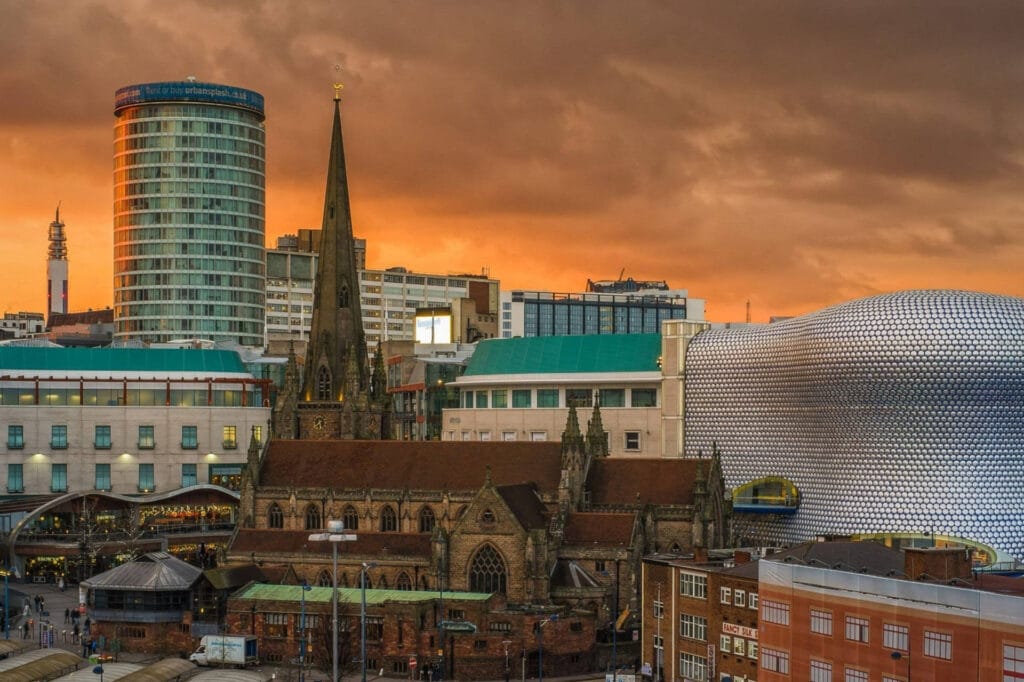

The debate around property-tax reform has renewed attention on how different housing markets are treated across the UK.
For Birmingham, the issue is not simply whether council tax or stamp duty might change in future. It is about whether the current system properly supports a city entering one of its most important regeneration periods.
As reported by The Standard, Andy Burnham has previously supported proposals to replace council tax and stamp duty with a proportional property tax. However, Reuters has reported that he has ruled out stamp duty changes at the next Budget.
That makes this a policy debate rather than an immediate reform. Even so, Birmingham provides a strong example of why the subject matters for regional investors.
Birmingham is not a single-market city
Birmingham’s housing market contains several different investment stories at once. City-centre apartments, inner-city regeneration areas, terraced homes, family suburbs and major new development zones all operate at different price points.
That variety is one of the city’s strengths. It gives investors more choice and allows different buyer and tenant groups to participate in the market.
It also means tax policy has different effects across the city. Upfront transaction costs can affect first-time buyers trying to enter the market, families looking to move, landlords assessing acquisition costs and developers planning future demand.
The city’s price point makes reform meaningful
Birmingham remains accessible for a major UK city. The average house price was £233,000 in May 2026, with first-time buyers paying around £211,000.
These values are high enough to create a serious investment market, but still low enough for policy changes to have a visible effect on affordability and transaction decisions.
If future reform reduced upfront moving costs or made property taxation feel more transparent, Birmingham could benefit because many buyers are already close to being able to act. The city does not need to overcome London-level pricing; it needs a system that helps demand move more confidently through the market.
Regeneration adds urgency to the debate
Birmingham is preparing for substantial physical change. Inside Housing has reported on the launch of the Birmingham East Mayoral Development Corporation, which is linked to an £11bn regeneration programme, 20,000 homes and more than 50,000 jobs.
This is not only a development story. It is also a housing-market story. New homes, transport improvements, employment space and public realm all need buyers and renters able to move into those areas with confidence.
A tax system that discourages movement can slow the process. A more balanced system could help Birmingham’s growth corridors convert regeneration into real residential demand.
Central Birmingham needs active buyers
The Central Heart vision adds another layer to the opportunity. Colmore Life has reported that the plans include more than 5,000 homes, 8,000 jobs, over 400,000 sq m of commercial floorspace and seven hectares of public space.
These schemes rely on confidence from several groups: renters, first-time buyers, investors, developers and employers. If buying and moving becomes easier over the long term, Birmingham’s central districts may be better placed to absorb new homes and support stronger resale demand.
According to TK Property Group, Birmingham’s investment appeal is strengthened by its ability to combine accessible pricing with major regeneration, making tax clarity especially important for long-term investor confidence.
Build-to-rent shows Birmingham’s demand is already recognised
Birmingham’s rental sector is already attracting institutional confidence. Place Midlands has reported that Birmingham is now the UK’s largest regional build-to-rent market, following strong pipeline growth.
This matters because build-to-rent investors focus on long-term occupational demand. They need evidence that people will continue choosing Birmingham for work, study and lifestyle.
Property-tax reform would not create that demand from scratch. The demand is already visible. The potential benefit is that a clearer, fairer system could improve confidence across the wider housing ladder around it.
A fairer system may support better use of housing
One criticism of stamp duty is that it can discourage people from moving. Families may delay upsizing, older homeowners may delay downsizing and workers may hesitate to relocate for employment.
In Birmingham, better use of existing housing is just as important as new supply. The city needs starter homes, rental apartments, family houses and accessible routes between them.
A system that reduces friction could support more efficient use of the city’s housing stock. That would be positive for residents and useful for investors, because liquidity is a key part of long-term property performance.
Investors need certainty, not sudden change
The strongest outcome for Birmingham would be clarity. Investors can adapt to reform when the rules are stable, phased and easy to understand. Sudden speculation can delay decisions, especially when buyers are unsure whether stamp duty or ownership costs may change.
That is why Burnham’s statement ruling out stamp duty changes at the next Budget is important. It gives the market breathing space while the wider debate continues.
For now, investors should focus on the fundamentals: location, rental demand, service charges, transport, property condition and realistic resale appeal.
Birmingham is well placed for the next phase
The property-tax debate highlights Birmingham’s position as a major regional market with room to grow. The city has accessible prices, strong rental demand, institutional investment and several major regeneration zones moving forward.
Future reform may or may not happen quickly. But the discussion itself underlines an important point: regional cities need a housing system that supports movement, confidence and long-term investment.
Birmingham already has the fundamentals. A clearer and fairer tax environment would make those strengths easier for buyers, renters and investors to act on.