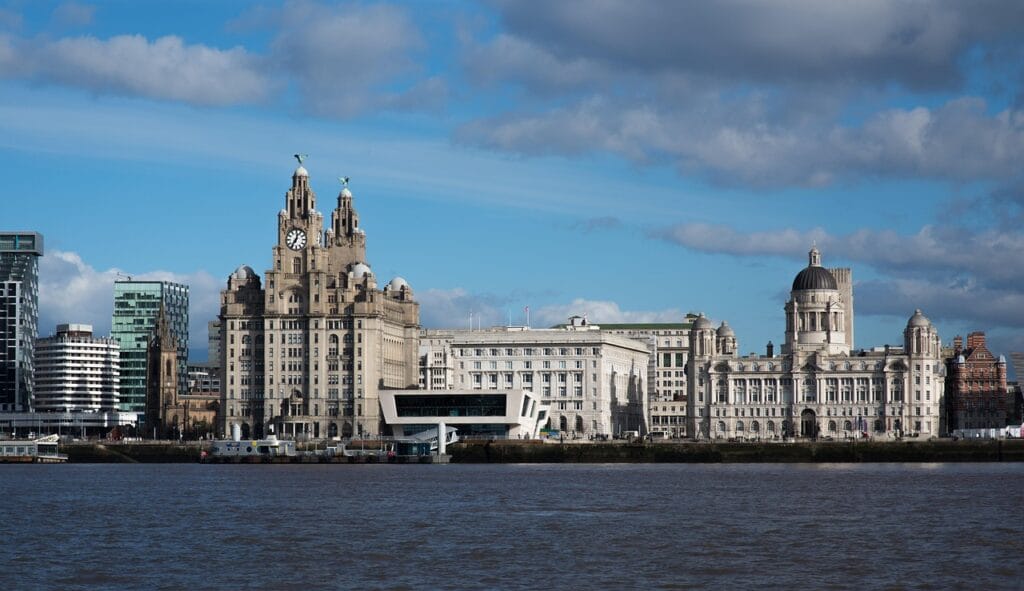

The debate around property-tax reform has placed fresh attention on how different parts of the UK housing market are taxed.
For Liverpool, the issue is not only about whether homeowners might pay more or less. It is about whether lower upfront moving costs would help a relatively affordable city become more active, liquid and investable.
As reported by The Standard, Andy Burnham has previously supported replacing council tax and stamp duty with a proportional property tax. However, Reuters has since reported that he ruled out stamp duty changes at the next Budget.
That means reform should be treated as a live debate, not confirmed policy. Even so, Liverpool shows why the subject matters for regional property markets.
Liverpool’s opportunity is movement, not just low prices
Liverpool’s property advantage is often described as affordability. That is true, but it is only part of the picture. The real opportunity is what affordability allows: more people can buy, move, upgrade, invest and eventually resell.
Official local data shows Liverpool’s average house price was £185,000 in May 2026, while first-time buyers paid an average of £170,000. Average monthly rent reached £905 in June 2026.
In a city with these price points, reducing upfront transaction costs could have a meaningful effect. Buyers may be more willing to move, investors may face a broader resale audience, and existing homeowners may be less discouraged from changing property when their needs shift.
Stamp duty can slow a healthy housing ladder
Stamp duty is paid at the point of purchase, which means it can discourage movement even when a household wants to relocate or upsize.
For Liverpool, that matters because a healthy housing ladder supports several groups at once. First-time buyers need starter homes. Growing families need more space. Downsizers may release larger homes back into the market. Investors need confidence that future buyers will be active when they eventually sell.
A system that reduces friction between these stages would be especially useful in a market where values are accessible enough for movement to happen more frequently.
First-time buyer demand strengthens the exit route
Liverpool’s first-time buyer market is one of its strongest investment assets. Guardian Money recently highlighted Liverpool as one of the UK’s more attractive starter-city markets, noting that it remains cheaper than neighbouring Manchester for buyers looking at flats.
For investors, this creates an important advantage. A well-selected Liverpool property can produce rental income during ownership while still appealing to owner-occupiers at resale.
That dual demand is valuable. It means the exit route is not limited to selling to another landlord. A stronger first-time buyer market can support liquidity, valuation confidence and long-term portfolio planning.
Regeneration gives mobility a bigger role
Liverpool’s property market is also being shaped by major regeneration. Housing Today has reported on Liverpool City Region’s £2bn investment fund, designed to support a pipeline of around 64,000 homes.
The North Docks is another major opportunity. Downtown in Business reported that the proposed Mayoral Development Corporation would cover 174 hectares of brownfield land, with potential for 17,700 homes and five million sq ft of commercial space.
Regeneration works best when people can move into and through the market. New homes need buyers and renters. Existing homes need active resale demand. Local workers need realistic routes into ownership. Tax reform that improves mobility would therefore support the wider regeneration story.
Lower prices make reform more visible
In very expensive markets, a tax change may be absorbed into prices or outweighed by affordability pressures. Liverpool is different because its lower average values mean transaction savings can be more meaningful relative to the purchase price.
That is why a reform debate focused on fairness between London and regional markets is relevant to investors. Liverpool has the conditions needed to turn reduced friction into activity: accessible prices, rising rents, regeneration and a broad first-time buyer base.
According to TK Property Group, Liverpool’s investment case is strengthened by its ability to combine rental income with future resale depth, making any policy that improves buyer movement especially relevant.
Investors still need policy clarity
The positive case depends on clear implementation. Landlords and buyers would need to understand how any new tax applied to second homes, investment properties, empty homes and future disposals.
Uncertainty can delay decisions, while stable rules allow the market to adjust. That is why Burnham’s statement ruling out immediate stamp duty changes is also important. It gives investors time to watch the debate without assuming sudden reform.
Liverpool stands out in the fairness debate
The property-tax debate is often presented as a London issue, but Liverpool shows why it matters nationally.
A city with lower prices, rising rents and major regeneration can benefit from policies that improve movement through the housing market. More mobility can support first-time buyers, strengthen investor exits and help new development areas attract residents.
Liverpool does not need tax reform to create its investment case. The city already has affordability, income potential and regeneration momentum. Reform would simply make those strengths easier for buyers and investors to act on.